Trying to choose between Circle C Ranch and other Southwest Austin areas can feel harder than it should. On paper, they may all seem like versions of the same suburban search, but the differences show up fast once you compare price, home style, commute routes, and neighborhood amenities. If you want to narrow your options with more confidence, this guide will help you see where Circle C fits, who it tends to suit best, and how nearby alternatives stack up. Let’s dive in.
Start With Circle C’s Market Position
If you are comparing Circle C Ranch to the broader Southwest Austin market, the first thing to know is that Circle C sits at the premium end of the group. Recent Redfin data shows a median sale price of $875,000 in Circle C Ranch over the last three months, while Southwest Austin overall was at $500,000 last month.
That gap matters because it changes your expectations right away. Circle C is not the default entry point for Southwest Austin buyers. It is better understood as a higher-priced, amenity-rich option within the submarket.
Among nearby comparison areas in the current data set, Circle C is also the highest priced of the four neighborhood snapshots. Travis Country came in at $827,500, Shady Hollow at $614,683, and Village at Western Oaks at $619,770.
Compare Price With Lifestyle
Price alone does not tell the whole story. In Southwest Austin, what you pay often tracks closely with the kind of neighborhood experience you want.
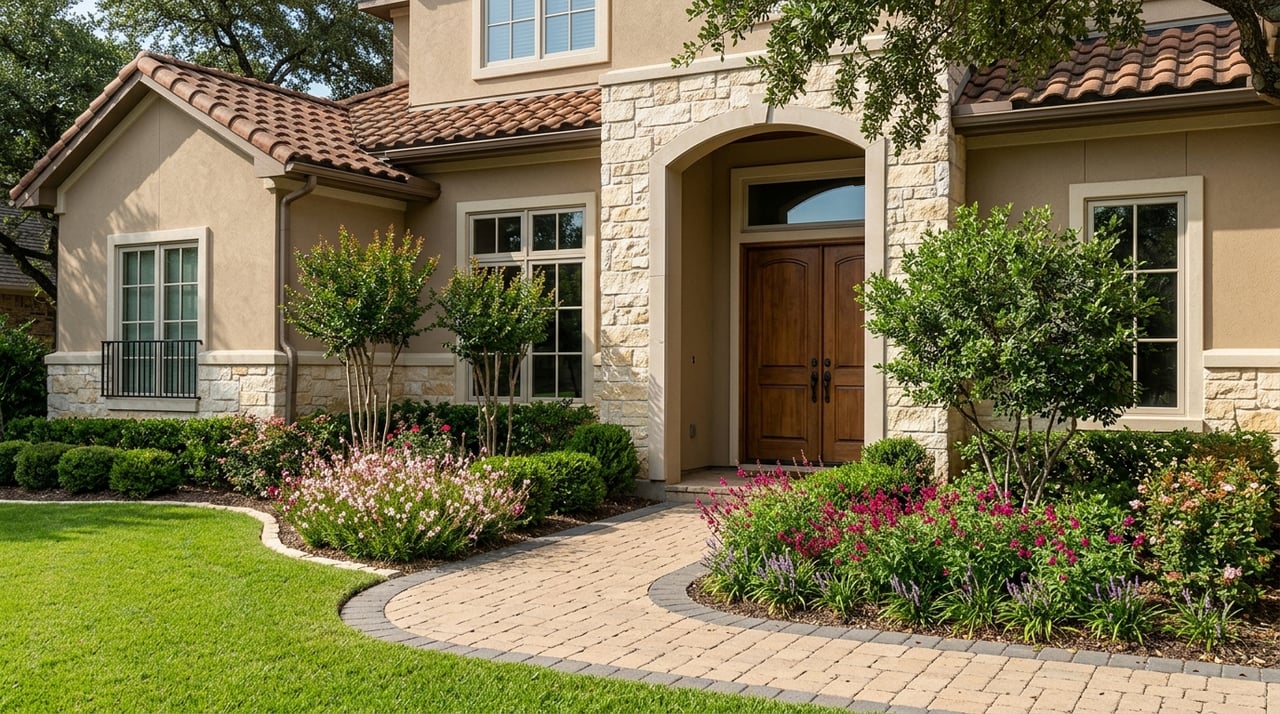
Circle C Ranch tends to appeal to buyers who want a more formalized community setup. You are often paying for a strong single-family setting, a deeper amenity package, and more structured exterior review through the HOA’s ACC process.
If your goal is to stretch your budget, you may find better value in places like Shady Hollow or Village at Western Oaks. If you want a middle ground between price and established neighborhood feel, Travis Country can be a useful comparison.
How the Housing Stock Differs
Circle C Ranch Homes
Circle C Ranch is centered on detached single-family living. Recent sold examples cited by Redfin ranged from about 2,294 to 3,515 square feet, with recent sold prices from roughly $600,000 to $938,000.
The Circle C HOA’s ACC rules are also written for improvements to single-family homes and lots. That points to a neighborhood where exterior changes are more formally reviewed, which can be a plus if you value consistency in the streetscape.
Travis Country Homes
Travis Country offers a more established housing profile. A recent sold home at 4191 Travis Country Circle was built in 1980 and sat on a 10,798-square-foot lot, and recent sold examples in the neighborhood ranged from $551,000 to $1.15 million.
For many buyers, that suggests a neighborhood with more age, more variation, and less of a master-planned feel than Circle C. If you like mature surroundings and older homes with character, Travis Country may stand out.
Shady Hollow Homes
Shady Hollow leans toward older homes and larger lots. A recent listing at 11110 Shady Hollow Drive was a 1974 single-story ranch on 0.54 acres, which helps illustrate the kind of lot-size advantage buyers may find there.
The neighborhood’s median sale price was $614,683, with recent examples ranging from the low $600,000s to the high $800,000s. If lot size is high on your list, Shady Hollow creates one of the clearest contrasts with Circle C.
Village at Western Oaks Homes
Village at Western Oaks is a large, established community of about 1,600 single-family homes built from the early 1980s through 2005. The neighborhood also includes select multifamily and commercial properties.
Its recent median sale price was $619,770, with sales ranging from the mid-$400,000s to the mid-$700,000s. That can make it attractive if you want Southwest Austin access at a lower price band than Circle C.
Amenities Are a Major Divider
Circle C Ranch Amenities
Circle C has the deepest amenity package in this comparison. The HOA maintains a community center, a seasonal community center pool, a year-round heated swim center, additional seasonal pools in Avana and GreyRock, and six playscapes.
The community also has access to Circle C Metropolitan Park, Slaughter Creek Trail, the Veloway, and the Lady Bird Johnson Wildflower Center area. If you want a neighborhood where amenities are a central part of daily life, Circle C is the strongest fit in this group.
Travis Country Amenities
Travis Country feels more greenbelt-driven than campus-style in its amenities. The neighborhood website describes it as an environmentally planned community with trails in the greenbelts and easy access to downtown Austin and the airport.
A recent sold listing also referenced community pools, parks, a recreation area, pickleball courts, tennis courts, community gardens, and private gated access to the Barton Creek Greenbelt. If your ideal setup is more trail and greenbelt oriented, Travis Country deserves a close look.
Shady Hollow Amenities
Shady Hollow has a clear and structured amenity package. Capistrano Park includes a swimming pool, wading pool, tennis courts, a basketball court, picnic tables, playscapes, and grills.
The HOA also maintains the David C. Ellis Community Center, West Nature Preserve, and Gatling Gun Park. The neighborhood notes that amenity access depends on being current on assessments, which is helpful to keep in mind as you compare HOA setups.
Village at Western Oaks Amenities
Village at Western Oaks takes a different approach. The HOA says it does not own land or amenities, but it emphasizes social events plus nearby shopping, parks, and trails.
Notable nearby outdoor options include Dick Nichols Park, the Western Oaks Karst Preserve, Latta Branch Greenbelt, and the Violet Crown Trail. If you care more about location and nearby conveniences than a large HOA amenity package, this area may be a better match.
Commute Reality in Southwest Austin
If commute is a big part of your decision, route access matters more than transit in these areas. Circle C Ranch is car-dependent, with a Walk Score of 17, Transit Score of 8, and Bike Score of 39. Village at Western Oaks is also car-dependent, though its Bike Score is slightly higher at 50 and its Transit Score is 17.
In simple terms, these are driving neighborhoods first. If you rely on transit for most daily trips, this part of Austin may not match that lifestyle as closely as other parts of the city.
Travis Country’s neighborhood website highlights easy access to downtown Austin and the airport. Village at Western Oaks also emphasizes access to MoPac and U.S. 71/290, and notes that it sits about 10 miles southwest of downtown.
Shady Hollow listings have also marketed an easy commute to downtown Austin, but your experience can vary depending on the exact route. Brodie Lane, Slaughter Lane, MoPac, and the 71/290 corridor can all shape drive times differently, so it helps to test your actual route during peak hours.
The Oak Hill Parkway project is another active factor in the wider corridor. TxDOT is reconstructing and widening U.S. 290 from the east end of Circle Drive to Loop 1 and SH 71 from U.S. 290 to Silvermine Drive, which is worth factoring into your planning.
A Simple Way to Compare Areas
When buyers are deciding between Circle C Ranch and nearby Southwest Austin neighborhoods, it often helps to reduce each option to its clearest strength. That does not replace touring homes, but it gives you a practical starting point.
Here is the simplest way to frame it:
- Circle C Ranch: the amenity-rich premium option
- Travis Country: the greenbelt-and-character option
- Shady Hollow: the lot-size-and-value option
- Village at Western Oaks: the location-and-convenience option
That snapshot lines up well with the current market data, housing profiles, and HOA structures in the research.
Which Area May Fit You Best?
If you want the most formalized neighborhood experience, Circle C is likely the clearest match. It stands out for centralized pools, playscapes, trails, and a more structured ACC review process for exterior changes.
If you want a more mature feel with larger lots and often a lower price point, Shady Hollow may offer better value for your priorities. If you want established homes, older trees, and strong greenbelt access, Travis Country can feel like a strong middle ground.
If your focus is proximity, everyday convenience, and access to nearby parks and retail over a large HOA amenity package, Village at Western Oaks may make more sense. The right answer depends less on the neighborhood name and more on how you want to live day to day.
How to Tour Smarter
Before you decide, try comparing these neighborhoods in a way that goes beyond online photos. Tour at least two or three areas on the same day so the differences in streetscape, lot size, traffic flow, and amenities are easier to spot.
As you compare, keep a short checklist:
- Your target price range
- Preferred home age and style
- Desired lot size
- Commute route and peak-hour drive time
- HOA structure and amenity priorities
- Whether you want a master-planned feel or a more established setting
That kind of side-by-side comparison usually makes your best fit much clearer.
If you want help narrowing down Circle C Ranch versus other Southwest Austin options, working with a local advisor can save you time and help you focus on the tradeoffs that matter most. For tailored guidance, relocation support, and neighborhood-level insight, connect with David Aceves.
FAQs
How does Circle C Ranch pricing compare to Southwest Austin?
- Circle C Ranch is currently positioned at the premium end of the Southwest Austin market, with a median sale price of $875,000 versus $500,000 for Southwest Austin overall in the cited data.
What type of homes are most common in Circle C Ranch?
- Circle C Ranch is primarily a single-family detached home neighborhood, with recent sold examples ranging from about 2,294 to 3,515 square feet.
Which Southwest Austin area offers larger lots than Circle C Ranch?
- Shady Hollow is the clearest larger-lot comparison in this group, with examples such as a 0.54-acre single-story ranch home.
What makes Travis Country different from Circle C Ranch?
- Travis Country generally offers an older, more established feel with greenbelt access, mature surroundings, and less of a master-planned character than Circle C.
Does Village at Western Oaks have the same HOA amenities as Circle C Ranch?
- No. Village at Western Oaks emphasizes social events and nearby parks, trails, and shopping, but its HOA says it does not own land or amenities.
Is Circle C Ranch a good fit if commute matters?
- It can be, but it is best to evaluate your exact route. Circle C is car-dependent, and drive times can vary based on whether you use MoPac, Brodie Lane, Slaughter Lane, or the 71/290 corridor.