A seller in Rim Rock calls her agent two weeks before closing, confused. The buyer's lender wants proof of a maintenance contract on the septic system. She has one. It's just not hers. It was written for the previous owner, three owners back, and nobody ever updated it. The house has been fine for years. The paperwork has not.
This is the moment that actually threatens a Rim Rock closing, and it has nothing to do with what most people assume is the risk in this part of Hays County. Buyers moving out from Austin proper hear "acreage subdivision west of the city" and brace for a well: yield, water quality, pump depth, all the due diligence that comes with drilling your own water supply. Rim Rock doesn't have that problem. It has a different one, and it's easy to miss because it looks like paperwork instead of infrastructure.
Water was never the question here
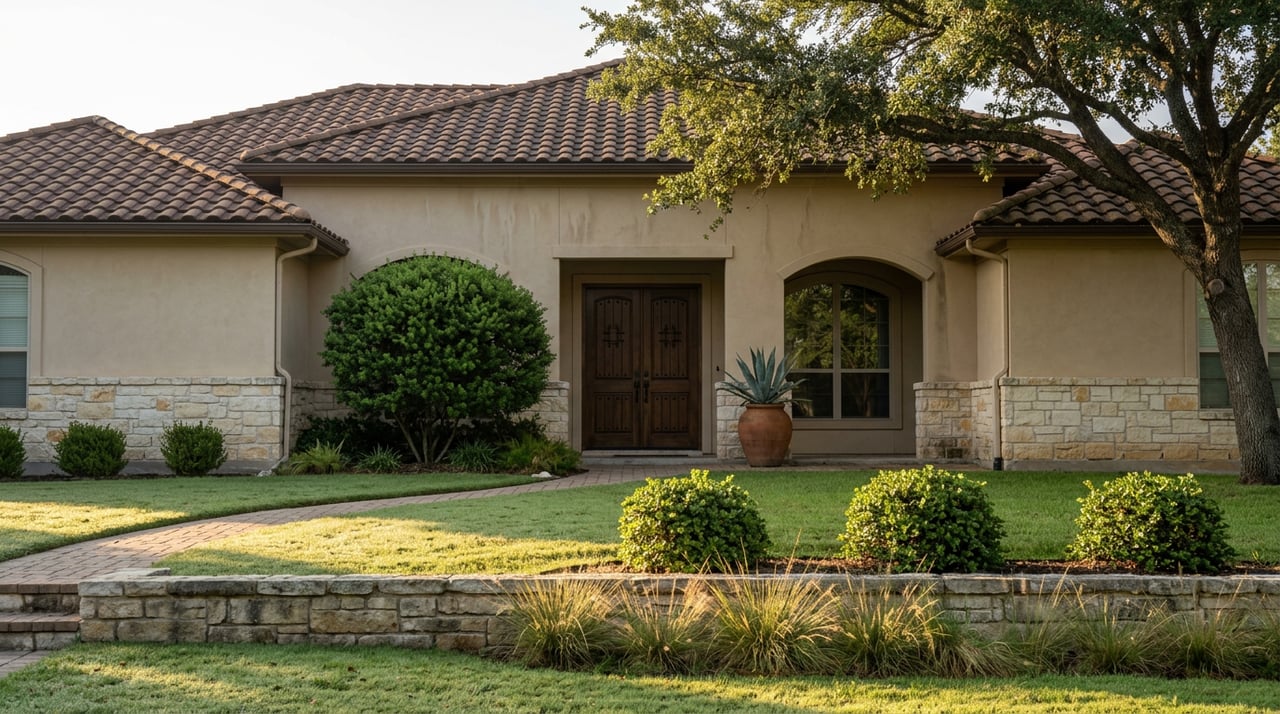
Rim Rock is a platted subdivision in Driftwood built out since 2006, with lots running an acre or more and homes from a mix of custom builders and production builders including Lennar, Mercedes Homes, and Century Communities. Unlike the raw acreage tracts scattered around Driftwood and Dripping Springs that depend on private wells drilled into the Trinity Aquifer, Rim Rock runs on piped municipal water through a utility district. Flip a tap and the water came from a treatment system with regulatory oversight, not a wellhead on the property line.
That distinction matters more this year than it usually would. Hays Trinity Groundwater Conservation District, which manages private wells across much of western Hays County, has been operating under emergency drought conditions, with wells failing at an unusual rate and new well permits paused until conditions improve. If you were shopping raw acreage nearby, that would be a serious question to ask before you made an offer. In Rim Rock, it isn't your question. Your water bill comes from the district, not the aquifer.
So the due diligence that dominates every other rural Driftwood conversation, the one about well depth and drought resilience, mostly doesn't apply here. Which is exactly why the thing that does apply catches people off guard. Every lot in Rim Rock still handles its own wastewater. There's no centralized sewer main running under those streets.
The system nobody budgets for
Individual septic systems, formally called on-site sewage facilities under Texas Commission on Environmental Quality rules, are required on every developed lot in the county regardless of size. Texas does carve out a narrower exemption from full OSSF permitting for tracts of ten acres or more when a licensed site evaluator signs off, but Rim Rock's lots sit at one to two acres. That threshold doesn't apply here. Every septic system in the subdivision was permitted and inspected at installation, which means there's a paper trail with Hays County Development Services if you know to ask for it.
Knowing to ask is the whole game. The type of system matters just as much as its existence, and in Rim Rock, the type is usually dictated by the ground itself.
| Conventional system | Aerobic treatment unit (ATU) | |
|---|---|---|
| Typical setting | Deeper, better-draining soil | Thin caliche or clay soil, common across the Edwards Plateau |
| Inspection requirement | No fixed state schedule; pumping recommended every 3-5 years | Every 4 months, three times a year, by a licensed maintenance provider |
| Annual cost | Roughly $75-150 | Roughly $200-600 for the contract, closer to $600-1,000 with electricity and chlorine included |
| Legal maintenance contract | Not required | Required for the life of the system under TCEQ rules |
| Lifespan with upkeep | Long, minimal moving parts | 15-20 years, shorter if maintenance lapses |
A lot of Rim Rock properties end up on the aerobic side of that table, and that's not incidental. The Edwards Plateau soils common across this stretch of Hays County don't drain well enough for a conventional gravity system on a lot this size, so an aerobic unit, which treats and sprays effluent rather than relying on soil percolation, becomes the practical choice. Add the fact that this part of the county sits within the Edwards Aquifer's recharge and contributing zone, where state rules require at least one acre per home and a 50-foot setback from any recharge feature with plans sealed by a licensed engineer or sanitarian, and you get a system that's more regulated, more mechanical, and more prone to a specific kind of failure than most sellers expect walking in.
The failure isn't usually the tank. It's the contract.
The paperwork that decides your closing date
Texas doesn't require a septic inspection before a home changes hands. What it does require, under Property Code Section 5.008, is that the seller disclose known septic issues on the standard Seller's Disclosure Notice and complete a supplemental form, TXR-1407, describing the system's type, age, and maintenance history. A handful of transfers are exempt from that disclosure, including court-ordered sales, foreclosures, and transfers between spouses, but a routine Rim Rock resale is not one of them.
Here's the part that trips up even experienced sellers: an aerobic system's maintenance contract does not automatically transfer to the new owner at closing. It's tied to the person who signed it. Most counties expect the buyer to have a compliant contract of their own in place within roughly 30 days of taking title, and if the seller's contract has already lapsed by the time the home goes under contract, that's the single most common reason a Rim Rock deal stalls in the option period. FHA and VA loans compound the pressure, since those lenders require appraisers to check for signs of septic failure and require setbacks of at least 50 feet between a well and a septic tank, 100 feet to the drain field, before they'll close. A lapsed contract or an undocumented repair can hold up financing entirely.
Before you list a Rim Rock home, a short list of steps handles nearly all of it:
- Pull your county permit record and confirm it still matches what's actually installed, especially if a previous owner added a bedroom, a pool, or a guest space without updating the system's capacity.
- Renew or reinstate the aerobic maintenance contract if it has lapsed, and get the last two to three inspection reports in hand.
- Have the tank pumped if it hasn't been done in the last two to three years, typically $235-485, well before a buyer's inspector shows up.
- Schedule a full pre-listing inspection, usually $300-600 including pumping, so any problems surface on your terms instead of the buyer's.
- Keep the disclosure paperwork, TXR-1407 included, ready to hand over the day you go active.
The repair-or-replace math
Once an inspection happens, the real negotiation is usually a cost comparison, and it's worth doing that math before you're sitting across from a buyer's agent. A $500 repair on a well-maintained system that's ten or fifteen years old is an easy yes. A $4,000 repair on a system pushing 28 years starts to look different next to a full replacement, which as of 2026 typically runs $10,000 to $30,000 or more depending on soil conditions and system type. Sellers who know that number going in can decide, calmly, whether to fix, replace, or price the home to reflect the system's age rather than getting surprised by it during the option period.
Quick answers for Rim Rock sellers and buyers
Does Rim Rock run on well water or city water? Neither, exactly. Homes connect to piped water through a municipal utility district, not a private well, which sets it apart from raw acreage properties elsewhere in Driftwood.
Who typically pays for the septic inspection? It's negotiable and not set by Texas law. In practice, sellers who order their own pre-listing inspection often keep more control over the outcome than those who wait for the buyer's inspector to find problems first.
What happens if the system fails inspection under an FHA or VA loan? Repairs generally have to be completed before the loan can close. That's a real timeline risk if the fix requires a new permit or a soil evaluation, which in Hays County can take two to six weeks depending on scheduling.
Can a seller ever skip the disclosure requirement? Only in specific situations such as court-ordered sales, foreclosures, or transfers between spouses. A standard resale in Rim Rock doesn't qualify.
None of this is a reason to avoid Rim Rock. It's one of the few places this close to Austin where an acre-plus lot, real tree cover, and a quiet cul-de-sac are still within reach, and the septic question is manageable once you know exactly what to check and when. It's just a different checklist than the one most buyers and sellers bring with them from inside the city, and the sellers who work through it before listing tend to close faster and negotiate from a stronger position.
If you're getting ready to sell in Rim Rock, or you're looking at a home there and want to know exactly what to ask before you write an offer, Ace Team ATX can walk you through it property by property. Let's find your Austin home.